
Mid-period salary change: how proration works
When a salary change takes effect partway through a pay period, OneHRIS pays days 1 to the effective date at the old daily rate and the remaining days at the new daily rate. Overtime and other premium rates for each segment use the corresponding base rate.
Example: promotion mid-period
An employee earns ₱26,100/month. A promotion raises the salary to ₱32,000/month, effective on the 10th. The pay period is the 1st to the 15th.
Daily rate (old): ₱26,100 × 12 ÷ 261 = ₱1,200
Daily rate (new): ₱32,000 × 12 ÷ 261 = ₱1,471.26
| Dates | Days | Daily rate | Amount |
|---|---|---|---|
| 1st to 9th (old rate) | 9 | ₱1,200 | ₱10,800 |
| 10th to 15th (new rate) | 6 | ₱1,471.26 | ₱8,827.56 |
| Total basic pay for period | ₱19,627.56 |
If the employee worked 2 hours of overtime on the 12th (already under the new rate), the overtime hourly rate is ₱1,471.26 ÷ 8 × 125% = ₱229.89 per overtime hour.
How OneHRIS handles it
When you set an effective date on a salary update:
- OneHRIS detects if the effective date falls inside a pay period that is already computed or open.
- If the period is open, the computation automatically splits at the effective date.
- If the period is already locked and disbursed, OneHRIS creates a retroactive adjustment for the difference in days 10 to 15. See retroactive pay adjustments after a locked payroll period.
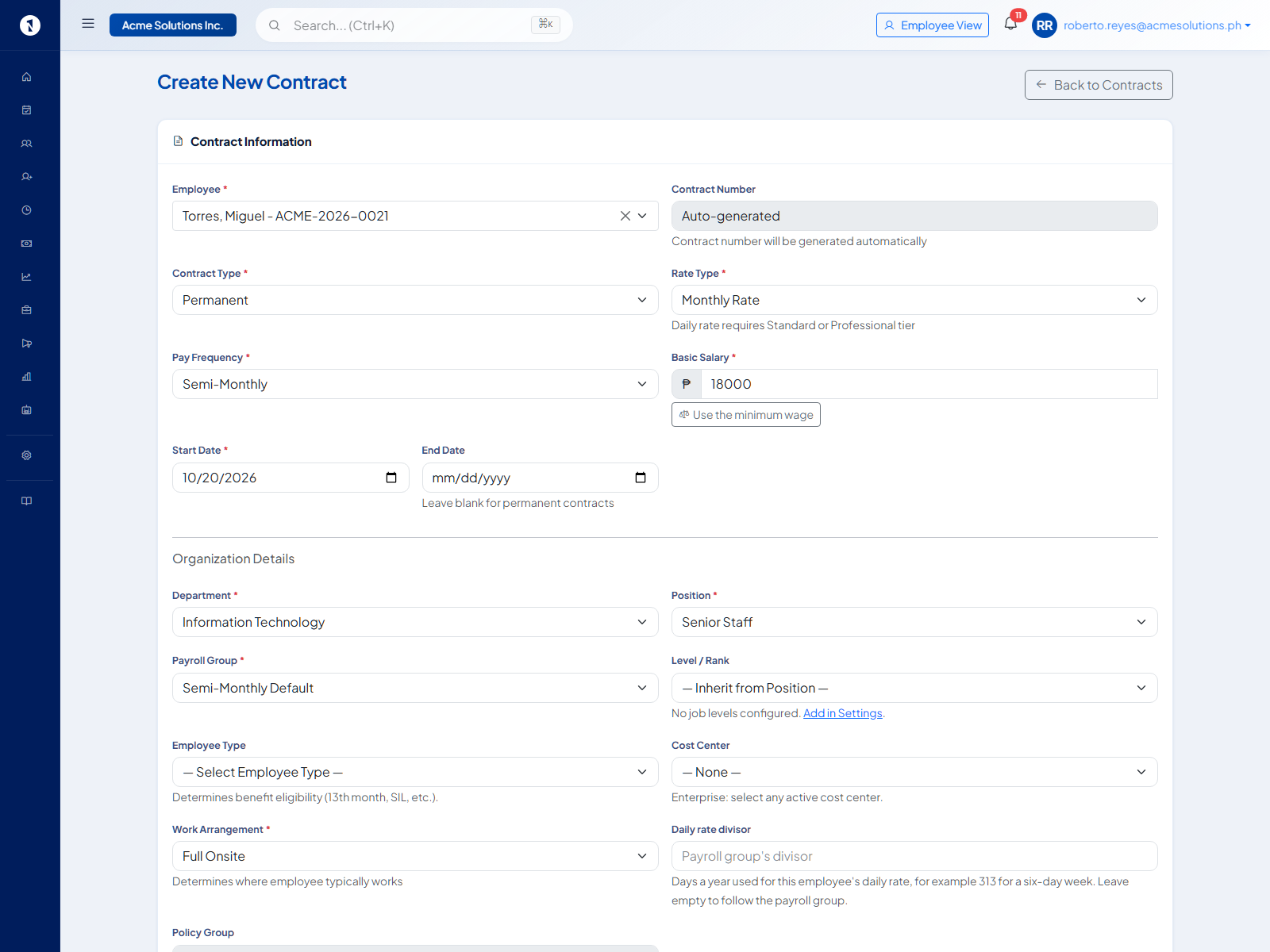
To process a salary change: open the employee's contract, select Update Salary, enter the new amount and effective date, and save. Run payroll normally — the split computation happens automatically.
Effect on 13th month pay
Because 13th month pay is based on total basic salary earned, the months before the increase use the old rate and months after use the new rate. See 13th month pay computation: proration, salary changes, and unpaid leave.
Questions people ask
Does the salary change affect overtime and holiday pay in the same period?
Yes. Overtime and other premium earnings are calculated on the daily rate of the day they occurred. Work done before the effective date uses the old daily rate; work done on or after the effective date uses the new rate.
Is the effective date inclusive?
Yes. The new rate applies starting on the effective date.
What if the effective date falls on a weekend or holiday?
The switch still happens on the effective date regardless of whether it is a working day. The first working day after the effective date uses the new rate.